.svg)




#1 Platform for Online Degree Guidance
Key program details before you decide
From globally recognized B-schools to UGC-entitled online universities, compare institutions that match your budget and career goals.



Here’s a quick overview of the key highlights of Online Diploma Programs, covering factors such as the program’s duration, mode, fees, and eligibility.

Duration
6 Months - 2 Years
Mode
100% Online
Eligibility
10th Pass, 12th Pass, or Graduate (depending on the diploma type)
Average Fees
₹50,000 - ₹2,00,000
Ideal For
Students, working professionals, career switchers, and skill-focused learners
Career Outcome
Entry-Level Jobs, Skill Enhancement, Career Advancement, Industry Certifications, and Professional Development
Online Diploma Programs are flexible, career-oriented courses that focus on developing practical skills and industry-relevant knowledge in a specific field. Unlike degree programs, diplomas are shorter in duration and are designed to provide focused learning that can help learners improve employability, gain specialized expertise, or prepare for higher education.
These programs are offered across a wide range of disciplines, including business management, information technology, healthcare, design, finance, digital marketing, data analytics, artificial intelligence, and more. Learners can access lectures, assignments, projects, assessments, and learning materials entirely online, making diploma programs suitable for both students and working professionals.
| Parameter | Online | Regular Online |
|---|---|---|
| Mode of learning | You study through an online platform (LMS) with videos, e‑content, quizzes, and proctored online exams, so you can log in from anywhere with a stable connection. | You attend classes on campus, sit in physical classrooms, use labs, and meet teachers face to face on a fixed timetable. |
| Flexibility | Very flexible. You can watch recorded lectures, choose evening/weekend slots, and pace your learning around work or family responsibilities. | Much less flexible. You usually have to follow a strict daily schedule, maintain attendance, and be present on campus. |
| Work–study balance | Designed with working people in mind. You can continue your job, prepare for exams like UPSC, or manage home duties while steadily completing the course. | Balancing a full-time job with regular classes is tough and often forces you to reduce work hours or take a break. |
| Career impact | When the diploma is from a UGC-approved institution, employers treat it as equivalent and appreciate the up-to-date, skill-based curriculum and digital tools you learn. | Still carries strong brand value, especially for well-known campuses, and offers more in-person networking and campus placement activities. |
| Cost & expenses | Usually cheaper overall. You save on hostel, food, and travel because you can study from home, and many institutes offer EMIs and fee flexibility. | Total expense is higher since you pay for campus facilities, plus living costs near the institute and daily commuting. |
| Ideal for | Best for working professionals, homemakers, people in smaller towns, and aspirants who need to juggle multiple goals. | Best for freshers who want full campus life, intensive lab work, and daily interaction with classmates and teachers. |
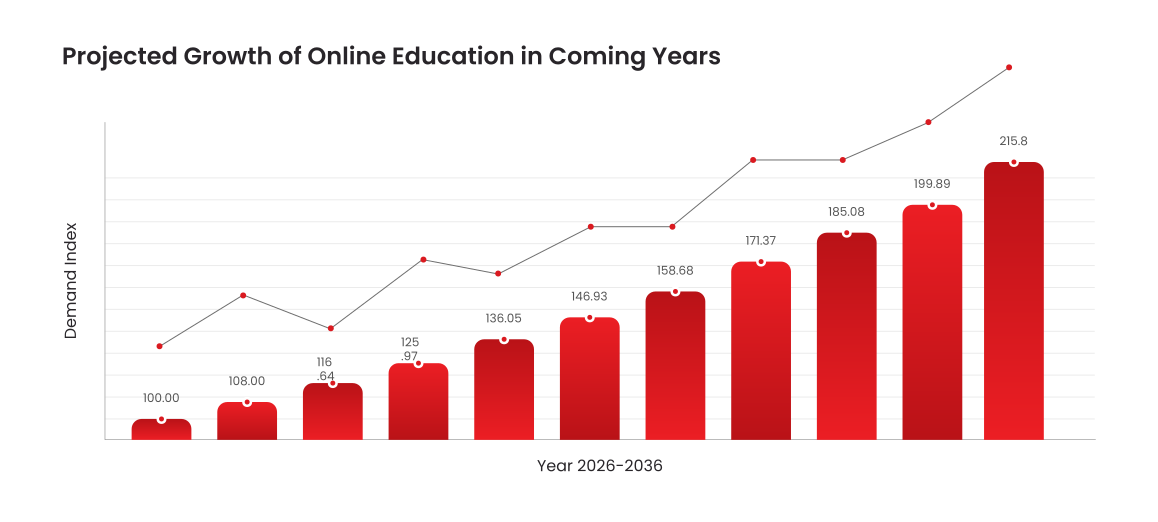
India's rapidly evolving job market is creating increasing demand for professionals with specialized skills and practical expertise. Industries such as technology, healthcare, digital marketing, artificial intelligence, finance, logistics, and business management continue to seek candidates who can quickly adapt to changing workplace requirements.
Online diploma programs are expected to play a significant role in workforce development by providing flexible and affordable education pathways. With continued support for online learning and digital education initiatives, diploma programs are becoming an increasingly popular option for students and professionals looking to upskill, reskill, or enter new industries.
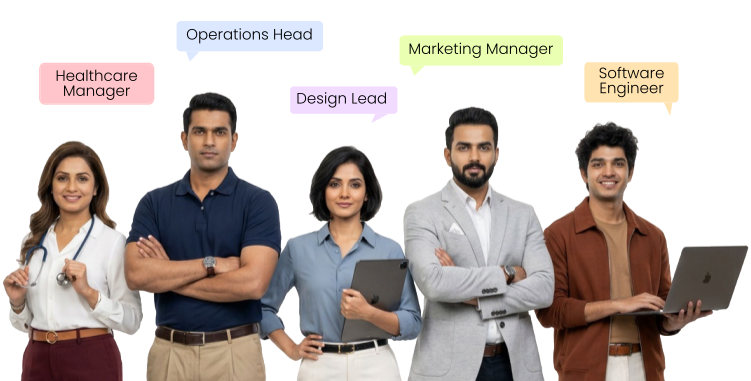
Online Diploma can open opportunities across a variety of industries depending on the specialization chosen. Whether you pursue a diploma in business, technology, healthcare, finance, design, or analytics, the program can help you develop job-ready skills and improve your career prospects.
Choosing an Online Diploma is not just about selecting an institution. It is about finding a course that aligns with your career goals, skill requirements, learning preferences, and industry interests. With hundreds of diploma options available across various sectors, comparing curriculum quality, faculty expertise, career support, and recognition can quickly become overwhelming. Here, we at CollegeSathi simplify this process for you. We help you compare institutions and diploma programs based on their recognition, curriculum quality, industry relevance, faculty expertise, learning support, career outcomes, and overall value. Speak with one of our experts and receive a personalized shortlist based on your goals.
It is definitely worth it, if the program matches your career goals. An Online Diploma course can provide excellent value for learners who want focused skill development, industry-relevant knowledge, and flexible learning without investing the time and money required for a full degree program.
 It is worth it if
 It may not be worth it if
Online Diploma Programs are suitable for learners at different stages of their academic and professional journeys.
Many learners enroll in diploma programs without evaluating curriculum quality, industry demand, recognition, and career outcomes. As a result, they may not achieve the expected value from their investment.
NAAC Accredited | NIRF Ranked | UGC-entitled

NIRF Ranked | NAAC Accredited | QS Recognized












50+ Companies, One Trusted Path




 everystep,fromshortlistingtoenrollment,issimplified.Evenafteradmission,dedicatedsupportensuresyou’reneveronyourown.
2 Lakh+
Learners Guided
Helping them make confident decisions


30K+
Successful Enrollments
Learners chose the right program


24/7
Student Support
Continuous support, even after admission


10K+
Live Counselling Sessions
Personalised guidance delivered every month


90%
Career Growth
Reported within one year


Up to 25K
Discount Coupon
Reduce Fee & Save more on your Tuition


Real experiences from learners who used CollegeSathi's guidance to choose the right university, specialization, or program for their budget.

I was confused about choosing the right online MBA university, but the Collegesathi counsellor guided me clearly. The admission process was smooth and hassle-free.
Deputy General Manager (DGM)

What I liked about Collegesathi is its honest approach. They understood my career goals and suggested options without pushing any university.
Senior Associate – US Taxation

As a working professional, I needed flexibility and clarity. The team guided me toward a university that matched both my schedule and budget. I’m really satisfied with my decision.
Senior Associate

From the first call to admission confirmation, the support was consistent and professional. I never felt lost or confused during the process.
Senior Analyst – Trade Finance Operations

I had so many doubts about online degrees, but Collegesathi explained everything in simple terms. That gave me the confidence to move forward.
HR and Executive Assistant

Comparing universities on my own was overwhelming. Collegesathi made it easy by clearly explaining fees, approvals, and specializations in one place.
Senior Consultant

The counsellor understood my long-term career plans and suggested a specialization accordingly. It felt like genuine guidance, not a sales pitch.
Founder

The best part was their transparency. Every detail about fees, eligibility, and course structure was shared upfront.
Entrepreneur

I appreciate how responsive the team was. Whenever I had a query, they answered quickly and clearly.
Senior Specialist

Thanks to Collegesathi, I secured admission in a recognized online MBA program without any hassle. The process was much easier than I expected.
Associate Director – Brand and Growth

They helped me shortlist the right university based on my budget and career goals. It saved me a lot of time and confusion.
Consultant Technician

I was unsure whether to choose an online MBA or another program. Their counselling session really helped me understand what’s best for me.
Sales Coordinator

The admission support was very organized. They guided me step-by-step and ensured all my documents were submitted properly.
Manager

Even after my admission was confirmed, they stayed in touch and guided me regarding the next steps. That extra support meant a lot.
General Manager

I felt comfortable asking even basic questions, and the team patiently explained everything without judgment.
Team Leader / Office 01 Grade

Collegesathi made university comparison simple and stress-free. I could clearly see which option suited me better.
Operations Manager

The guidance I received helped me feel confident about investing in my higher education.
General Manager

I was worried about choosing the wrong university, but their expert advice gave me clarity and peace of mind.
Manager

The entire experience felt smooth, professional, and trustworthy. I would definitely recommend them to others.
Assistant Vice President

They helped me understand the difference between various online universities and accreditation details in a simple way.
General Manager

The guidance from Collegesathi's counsellor felt genuine and personalized. They focused on what was right for me instead of rushing the admission.
Sales & Purchase Manager

Their one-on-one counselling session really made a difference in my final decision.
Assistant Manager

The team was supportive throughout the enrollment process and kept me updated regularly.
Assistant System Engineer

Choosing the right university felt overwhelming at first, but Collegesathi made it manageable and clear.
Chief Engineer

Overall, it was a very positive experience. I’m happy I trusted Collegesathi for my online degree admission.
Senior Compliance Officer

Yes. Online Diploma Programs offered by recognized universities, institutions, and approved educational providers are widely accepted for skill development, career advancement, and professional learning. However, learners should verify the institution's recognition and credibility before enrolling.

No Charges, no spam
Counsellor calls within 30 minutes
Add University
Add University
Add University

Popular PG Programs
Trending UG Programs
Doctorate Programs
Executive Programs
Trending Online Universities
In Demand MBA Specializations
In Demand MCA Specializations
CollegeSathi aims to provide unbiased and precise information to aspirants, along with comparative guidance on universities and their programs. The content on the CollegeSathi website, including text, graphics, images, blogs, videos, and university logos, is meant for informational purposes only and should not be considered a substitute for official information provided by academic partners. While we make every effort to keep the information accurate and up to date, CollegeSathi does not guarantee the completeness or reliability of the content and is not responsible for any errors, omissions, or losses resulting from its use.
© CollegeSathi 2026. All Rights Reserved.