



Master of Data Science (Global) Program
A Master of Data Science (Global) Program is a 2-year postgraduate program designed for individuals aiming to build advanced careers in data science, analytics, artificial intelligence, and global technology-driven industries. This program is particularly beneficial for students, IT professionals, analysts, engineers, and aspiring data scientists seeking flexibility in their learning approaches. Additionally, the program supports remote learning through virtual classes and online resources, making it flexible for varied schedules.
The Master of Data Science (Global) program distinguishes itself from traditional on-campus offerings by emphasizing convenience and accessibility, ensuring that students do not sacrifice academic standards. The globally recognized and industry-aligned program equips students with essential knowledge in programming, statistical modelling, machine learning, and data-driven decision-making. It is designed to develop professional competencies while allowing individuals to balance their education with personal and work responsibilities.

87%
0%
Growth In Career
0+
Cutting-Edge Specializations
2 Years
Years of Learning
Accreditation and Academic Value
Institutions offering Data Science programs maintain strong academic standards in curriculum design, teaching methods, and practical training to ensure high-quality learning outcomes. These programs match the depth of traditional on-campus degrees while integrating modern technologies like artificial intelligence, cloud computing, and big data tools. They are often supported by reputed universities, global accreditation bodies, and industry partnerships, which adds credibility and value. As a result, the qualifications are well-recognized in the global job market and help graduates become competitive and job-ready across various industries worldwide.


Entrance Exams
Admission to Master of Data Science programs may require entrance exams, depending on the university and country. Common entrance requirements include Graduate Record Examination (GRE), Graduate Management Admission Test (GMAT), University-specific aptitude tests, and Coding or analytics-based assessments. These exams help institutions evaluate candidates’ analytical ability, quantitative skills, and readiness for advanced data science coursework. However, many online or professional programs offer direct admission based on academic qualifications and professional experience.
Why should I pursue a Master of Data Science (Global) Program?
To succeed in the rapidly evolving data-driven economy, it’s important to build skills in areas like artificial intelligence, machine learning, and advanced analytics. For growing a career in data science, business intelligence, or AI, professionals need a strong mix of technical knowledge, logical thinking, and smart decision-making abilities.
A Master of Data Science (Global) program offers a flexible way to learn, combining theory with real-world practice. It helps learners gain industry-relevant skills while still managing their work and personal responsibilities comfortably.
The following are the reasons for pursuing a Master of Data Science (Global) Program is a smart investment:

Flexible Learning

Career Growth

Affordable Learning

Global Networking

Recognised Degrees
The following are the reason for pursuing an Master of Data Science (Global) Program is a smart investment for:
Flexibility with No Career Break
The program allows students to continue working while pursuing their degree. Learners can access course materials, attend live sessions, and complete assignments at their convenience, making it ideal for working professionals.
Career Growth & Global Opportunities
The program enhances technical and analytical skills that can be directly applied in global industries such as IT, finance, healthcare, and e-commerce. It opens opportunities for high-paying roles across international markets.
Cost-Effective Learning
Online programs eliminate relocation, travel, and accommodation costs, making quality global education more affordable without compromising on academic standards.
Global Networking
Students interact with faculty members, industry experts, and peers from different countries through webinars, live sessions, and collaborative projects, helping build a strong professional network.
Recognized Degrees from Top Institutions
Many reputed global universities offer accredited Data Science programs, ensuring credibility and strong industry recognition.

The curriculum is carefully structured to align with current industry requirements, covering key areas such as machine learning, artificial intelligence, big data analytics, and essential programming tools like Python, R, and SQL. This ensures students gain practical, job-ready skills.
The program leverages advanced technologies, including AI-driven platforms, cloud-based labs, virtual coding environments, and interactive dashboards, creating an engaging and hands-on learning experience.
Students are guided by experienced data scientists, industry professionals, and academic experts who bring real-world insights and practical knowledge into the learning process.
Regular assignments, live projects, quizzes, and case studies help students monitor their progress and continuously improve their performance.
The program integrates global best practices with real-world applications, preparing students for diverse international career opportunities in data science and analytics.
What will be the future of Data Science in 10 years?
The future of Data Science programs will be strongly shaped by advancements in artificial intelligence, automation, and large-scale digital transformation across industries. As organizations increasingly rely on data-driven strategies, academic programs are expected to evolve by incorporating hybrid learning models, personalized learning paths, and real-time industry projects. These changes will ensure that learners gain both theoretical knowledge and practical experience aligned with current industry needs.
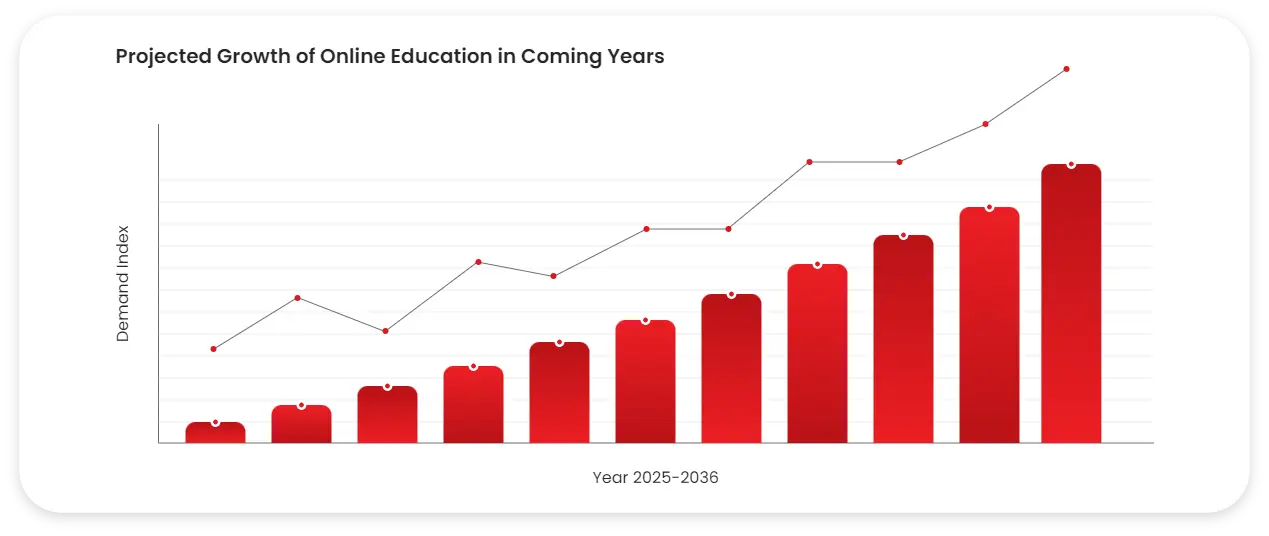
The expected growth of Data Science programs shows a steady increase in student enrollment from 2025 to 2036. This rise is mainly because more industries like technology, finance, healthcare, retail, and government are looking for skilled data professionals. Businesses are also investing more in data analytics and prediction tools to improve their decisions and make their operations more efficient and effective.
With the growing use of AI tools, cloud computing, and big data platforms, these programs are becoming even more important and relevant. Universities are also likely to work more closely with industry experts to design courses that match real job needs. Because of this, students will be better prepared for real-world challenges, making Data Science one of the most secure and future-ready career choices across the world.
Top Institutions offering Master of Data Science (Global)
Top institutions offering Master of Data Science (Global) programs are generally internationally recognized universities and reputed academic bodies known for strong research and industry-focused teaching. Here is the most credible institute from where you can pursue this course:
| Leading Online University | |
|---|---|
| Deakin University | |
These institutions offer globally recognized programs for professionals and students aiming to build careers in data science. Each program includes unique features such as industry projects, flexible learning schedules, and international exposure.
Advantages of applying through CollegeSathi
Exploring 1000s of universities and picking a perfect one can be very difficult and exhausting. That’s where CollegeSathi steps in, making your journey a lot easier with our expert solutions for simplifying your research and finding your perfect fit.
The following are the reasons why you should chooseCollegeSathito be your educational partner:


Comprehensive University Comparison
CollegeSathi allows users to compare over 100 online colleges on one platform. It simplifies comparison based on courses offered, fee structure, accreditation, and more, helping students make well-informed career decisions.


Expert Counseling at No Cost
CollegeSathi provides free expert guidance and counseling to help students clear doubts and choose the best program based on academic goals, aspirations, and career objectives.


Budget-Friendly Options
CollegeSathi helps students find affordable programs that maintain high educational standards. Counselors provide information about low-cost courses and accessible scholarships, making higher education more accessible.


Personalized Program Recommendations
Experts provide personalized program recommendations based on individual objectives, whether for working professionals seeking career growth or students exploring academic opportunities.


Simplified Application Process
From selecting the right program to completing the application, CollegeSathi offers end-to-end guidance for a smooth, time-saving, and hassle-free experience.
Admission Process for Master of Data Science: Eligibility & Entrance Exams
Understanding the eligibility criteria is an important step before applying for a Master of Data Science program, as it helps candidates assess their readiness and meet university requirements effectively. Most universities follow standard admission guidelines to ensure applicants have a strong academic foundation.
Applicants are generally required to hold a bachelor’s degree in a relevant discipline such as CS, IT, Mathematics, Statistics, Engineering, or a related field.

Work Experience Requirement for Master of Data Science
Work experience is generally not mandatory for admission into Data Science programs. However, candidates with prior experience in programming, analytics, or IT roles may find it easier to understand advanced concepts and apply them in real-world scenarios. Basic knowledge of mathematics, statistics, or coding can be beneficial for learners. Fresh graduates can also pursue the program and build skills through practical projects. Hands-on experience during the course helps bridge the gap between theory and real-world application.
Entrance Exams AcceptedThe admission process for a Master of Data Science (Global) program may vary by university, and many programs do not require a formal entrance exam. Instead, institutions may use different assessment methods such as global-level exams like GRE or GMAT, university-specific entrance tests, and skill-based evaluations including coding tests, analytics assessments, or technical interviews to assess candidates’ readiness. These requirements differ based on the university, country, and mode of delivery (online or hybrid).
Duration & Fees of Master of Data Science (Global): What to Expect?
Understanding the structure of the program is important before making a decision. Duration and fee details help learners evaluate flexibility, affordability, and overall value. Two of the most important factors to consider when enrolling in a Master of Data Science (Global) program are its duration and overall cost. These play a critical role in helping learners plan their academic journey and financial investment effectively.

- Master of Data Science programs usually take about two years to complete. However, many universities give students extra flexibility, allowing them to extend it to 3–4 years, especially for working professionals who need more time to balance studies and work.
- The course is generally divided into semesters or modules, so students can learn step by step while gaining both theory and practical skills. Some universities also offer faster tracks for students who want to finish the program earlier.
When planning for an online program, it is important to balance the duration of the program with your personal schedule and finances. Comparing different universities side by side can help you choose the best option for your academic and career goals.
Financial Aid & Scholarship for Master of Data Science (Global)
Pursuing a global-level postgraduate program can be a significant financial investment. However, various financial aid options are available to make education more accessible and affordable for students from diverse backgrounds. Many universities offer merit-based and need-based scholarships to support deserving candidates. Flexible payment plans and EMI options further help learners manage their financial commitments effectively.

Scholarships for Students and Working Professionals
Scholarships are offered by universities, private organizations, and government bodies to support students pursuing higher education in data science. These scholarships may be based on Academic merit, Financial need, Professional experience, and Diversity and inclusion initiatives. Some universities also offer early-bird discounts, performance-based scholarships, and special funding options for women in technology or underrepresented groups in data science.

Loan Facilities for Online Learning Candidates
Educational loans are widely available for students enrolling in online or global data science programs. Banks and financial institutions provide customized loan options with flexible repayment plans. These loans typically cover tuition fees, course materials, and related academic expenses. Students are encouraged to compare interest rates, repayment terms, and eligibility criteria before selecting a loan provider to ensure financial stability during and after their studies.
"By exploring these sources of financial assistance, potential students in India can minimize some of the financial issues connected with higher education"
<p>Curriculum & Specializations in Master of Data Science (Global) Program</p>
The curriculum of a Master of Data Science (Global) program is carefully designed to address the growing demand for data-driven professionals across industries. It combines theoretical foundations with practical applications, enabling students to develop strong analytical, technical, and problem-solving skills. The program focuses on building expertise in data handling, statistical analysis, machine learning algorithms, and advanced computing techniques. It also emphasizes real-world applications through case studies, projects, and industry collaborations.
Core Subjects Typically Covered
Data Structures and Algorithms
This subject focuses on organizing, storing, and managing data efficiently using algorithms and computational techniques.
Machine Learning
Machine learning involves developing models that can learn from data and make predictions or decisions without explicit programming.
Big Data Analytics
This area emphasizes handling and processing massive datasets using technologies such as Hadoop, Spark, and distributed computing frameworks.
Statistical Methods and Probability
Statistics is essential in data science for analyzing data, identifying patterns, and making informed decisions.
Data Visualization
This subject focuses on presenting complex data in clear and interactive visual formats, helping stakeholders understand insights effectively.
Artificial Intelligence
AI covers advanced topics such as neural networks, deep learning, NLP, and intelligent systems, enabling automation and smart decision-making.

Online Master of Data Science vs Regular Program: Which is better for you?
Choosing between an online Master of Data science and on-campus Master of Data Science program depends on factors such as flexibility, cost, career goals, and personal preferences. Let’s look at the difference in both the mode of education:
| Parameter | Online Master | Regular Master |
|---|---|---|
| Mode of learning | Learn through live sessions, recorded lectures, coding labs, and hands-on online projects at your own pace. | Attend in-person classes, practical labs, and face-to-face sessions on campus. |
| Flexibility | Offers high flexibility, allowing you to study from anywhere and manage your own schedule. | Follows a fixed timetable with regular attendance required. |
| Work-study balance | Ideal for working professionals who want to continue their jobs while studying. | Requires full-time dedication, making it harder to work alongside. |
| Career Impact | Helps apply new skills directly to your current job in real time. | Focuses on learning first, with career application after completing the course. |
| Cost & Expenses | More affordable as it eliminates relocation, accommodation, and travel costs. | Generally more expensive due to tuition, housing, and additional living expenses. |
| Ideal for | Best suited for professionals, career switchers, and learners seeking flexibility. | Suitable for fresh graduates looking for a full campus experience. |
Placement Opportunities after Master of Data Science
A Master of Data Science (Global) program opens doors to a wide range of career opportunities across industries. As organizations increasingly rely on data-driven decision-making, the demand for skilled data professionals continues to rise. Graduates can explore roles in analytics, AI, machine learning, and data engineering across global organisations. The program also enhances employability by building practical skills aligned with industry requirements.

Career Growth for Professionals
Working professionals can upgrade technical and analytical skills, enabling them to transition into advanced roles such as data scientists, analytics managers, and AI specialists across industries. This supports long-term career progression and higher responsibility roles.
Opportunities for Specialized Roles
Graduates can pursue specialized roles in machine learning engineering, data engineering, business analytics, and artificial intelligence research, depending on their chosen domain and expertise. This allows individuals to build deep expertise in specific areas of interest.
Industry Tie-Ups and Placement Support
Many universities collaborate with global companies to provide internships, live projects, industry exposure, and placement assistance, helping students gain practical experience and improve employability. These collaborations help bridge the gap between academic learning and industry requirements.
Global Career Opportunities
The program prepares students for international job markets, enabling them to work with multinational companies, global teams, and remote roles across various industries and geographical locations. It enhances opportunities to build a career on a global scale.
Entrepreneurship Opportunities
Graduates can launch their own data-driven startups, analytics consulting firms, or AI-based businesses, using their skills to solve real-world problems and create innovative solutions. It encourages innovation and independent career paths in the tech space.
Career Transition Opportunities
Professionals from non-technical backgrounds can transition into data science roles by gaining technical knowledge, analytical skills, and practical experience through structured learning and projects. This makes the field accessible to learners from diverse academic backgrounds.
Career Opportunities
A Master of Data Science (Global) opens up wide career opportunities across multiple industries where data plays a key role in decision-making. Graduates can work in sectors like technology, finance, healthcare, retail, and consulting, depending on their interests and skills. The program prepares learners for advanced, data-focused roles that involve problem-solving, analytics, and strategic business support.
| Job Positions | Industry Type | Average Annual Salary Package |
|---|---|---|
Data Scientist | IT, AI, Tech Companies | INR 8,00,000 – 20,00,000 |
Data Analyst | Corporate, Finance | INR 4,00,000 – 10,00,000 |
Machine Learning Engineer | AI, Product Companies | INR 10,00,000 – 25,00,000 |
Business Analyst | Consulting, Corporate | INR 6,00,000 – 15,00,000 |
Data Engineer | IT, Cloud Companies | INR 8,00,000 – 22,00,000 |
AI Specialist | Advanced Tech, Research | INR 12,00,000 – 30,00,000 |
Conclusion
Frequently Asked Questions
It is a postgraduate program focused on data analytics, machine learning, artificial intelligence, and big data technologies, designed to equip professionals with technical and analytical skills for building successful global careers.
Yes, it is highly valuable due to increasing demand for data professionals, strong salary growth, global career opportunities, and the growing importance of data-driven decision-making across industries worldwide.
The average salary ranges from INR 6 LPA to INR 18 LPA, depending on job role, experience, industry, and skill level, with higher packages offered for specialized and experienced professionals.
Candidates with a bachelor’s degree in Computer Science, IT, Mathematics, Statistics, Engineering, or related fields are eligible, provided they meet minimum academic requirements set by the university.
Graduates can work as Data Scientists, Machine Learning Engineers, Data Analysts, AI Specialists, Business Analysts, or Data Engineers across industries such as IT, finance, healthcare, and consulting sectors.
Yes, basic knowledge of programming languages such as Python, R, or SQL is required, as coding plays a crucial role in data analysis, model building, and implementing machine learning algorithms effectively.
Yes, the program is designed for working professionals with flexible schedules, online learning options, and self-paced modules, allowing them to balance work responsibilities while upgrading their technical and analytical skills.



Popular PG Programs
Trending UG Programs
Doctorate Programs
Executive Programs
Trending Online Universities
In Demand MBA Specializations
In Demand MCA Specializations
CollegeSathi aims to provide unbiased and precise information to aspirants, along with comparative guidance on universities and their programs. The content on the CollegeSathi website, including text, graphics, images, blogs, videos, and university logos, is meant for informational purposes only and should not be considered a substitute for official information provided by academic partners. While we make every effort to keep the information accurate and up to date, CollegeSathi does not guarantee the completeness or reliability of the content and is not responsible for any errors, omissions, or losses resulting from its use.
© CollegeSathi 2026. All Rights Reserved.