



Resume Tips 2026: How to Prepare a Resume That Gets You Hired

In today’s competitive job market, your resume is more than just a document; it is your first impression, personal brand, and entry ticket to career opportunities. With recruiters spending just a few seconds reviewing applications, knowing how to make a resume that stands out in 2026 is essential.
Whether you're a fresher or an experienced professional, this guide will walk you through resume tips 2026, ATS-friendly resume strategies, and expert hacks to help you land interviews faster.
What Is a Resume and Why Does It Still Matter in 2026?
A resume is a short, focused document that tells a potential employer who you are professionally. It covers your work experience, skills, education, and achievements, all packaged in a way that is relevant to the job you want.
The key word there is "focused." A resume is not a life story. It is a curated highlight reel, and the more relevant it is to the specific job, the better your chances of getting called in.
Most corporate roles in India and globally ask for a resume, not a CV. Here is the simple difference: a CV is long and detailed, covering your full academic and professional history. It is mostly used in research, academia, and medicine. A resume, on the other hand, is typically one to two pages and changes slightly with each application. For private-sector jobs, a resume is almost always the right choice.
Difference Between Resume and CV (Must-Know in 2026)
While both a resume and a curriculum vitae (CV) are used for job applications, they differ in format, length, and purpose:
| Aspect | Resume | CV |
| Length | Typically 1-2 pages, concise and to the point. | Longer, often 2+ pages, providing a comprehensive overview. |
| Content | Tailored to the specific job, emphasizing relevant skills and achievements. | Includes detailed information on all academic and professional history. |
| Purpose | Ideal for most jobs in industries like business, marketing, and IT. | Commonly used in academia, research, and education. |
| Customization | Highly customized for each job application. | Usually static, detailing long-term career achievements. |
Understanding these differences helps you choose the right format for your career aspirations and industry expectations. For most corporate and creative roles, a resume is the preferred document, while CVs are more suitable for academic and research-focused positions.
Pro Tip: For most private-sector roles in India, an ATS-friendly resume format is preferred over a CV.

Your career, our expertise - talk to a counsellor
How Recruiters Screen Resumes in 2026
Hiring managers and recruiters use resumes as a screening tool to filter out unqualified candidates and shortlist potential hires. Here's how they evaluate resumes:
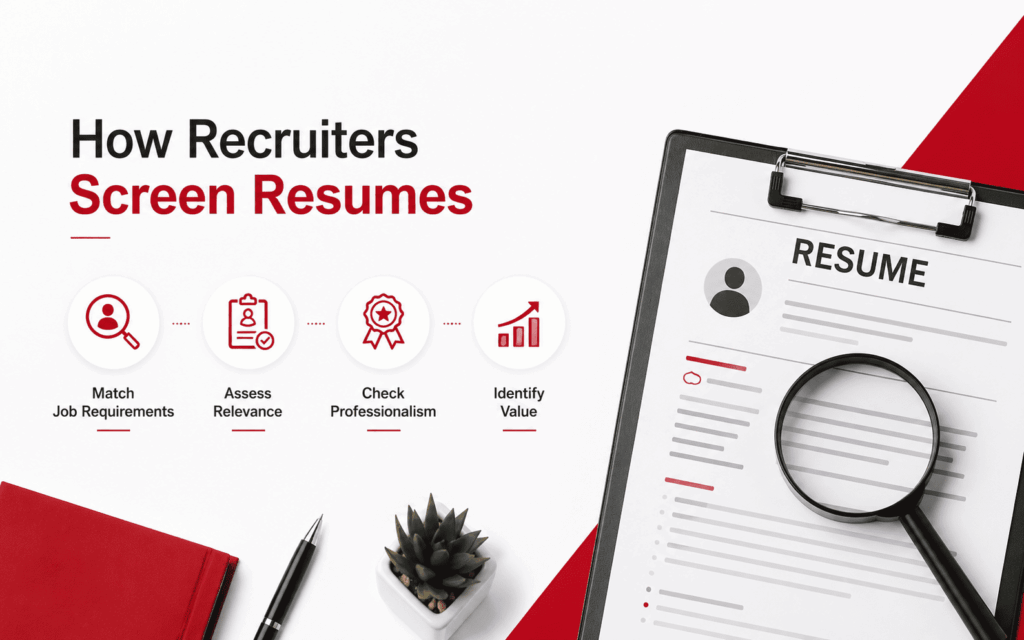
- Matching Job Descriptions – They scan resumes for keywords, skills, and qualifications that align with the job posting.
- Assessing Relevance – They prioritize candidates whose resumes demonstrate experience and achievements directly applicable to the role.
- Judging Professionalism – Spelling errors, poor formatting, and lack of clarity can immediately disqualify a candidate.
- Identifying Value – They look for quantifiable achievements that showcase how you’ve added value to previous organizations.
An effective resume simplifies this process by presenting the most relevant and impactful information in a way that stands out, ensuring you move on to the next phase of the hiring process.
Resume Writing Tips 2026: Things That Actually Get You Noticed
Crafting a resume is not a one-time task but an ongoing process that requires attention to detail and strategic thinking. Below are some tips to help you perfect your resume and stay ahead in your job search.
Dos and Don’ts of Resume Writing
Dos:
- Be Specific: Use quantifiable achievements and metrics to demonstrate your impact, such as “Increased sales by 25% over two quarters.”
- Tailor Your Content: Customize your resume for each job application to align with the employer’s needs.
- Use Keywords: Incorporate relevant keywords from the job description to pass through Applicant Tracking Systems (ATS).
- Highlight Your Skills: Showcase both technical and soft skills that make you a well-rounded candidate.
- Include a Professional Summary: Start your resume with a brief summary that highlights your core strengths and career goals.
Don’ts:
- Avoid Fluff: Stick to factual, impactful statements. Avoid overused phrases like “team player” or “hard worker.”
- Don’t Include Irrelevant Information: Avoid hobbies or personal details unrelated to the job.
- Skip Personal Pronouns: Avoid “I” or “my.” Use concise action verbs like “developed,” “managed,” or “achieved.”
- Don’t Use Unprofessional Email Addresses: Ensure your contact information is appropriate and up-to-date.
- Avoid Overdesigning: Steer clear of distracting colors, graphics, or fonts that can distract the recruiter from your content.
Your career, our expertise - talk to a counsellor
How to Keep Your Resume Updated
An outdated resume can leave you scrambling when opportunities arise. Regular updates can help you stay prepared and confident.
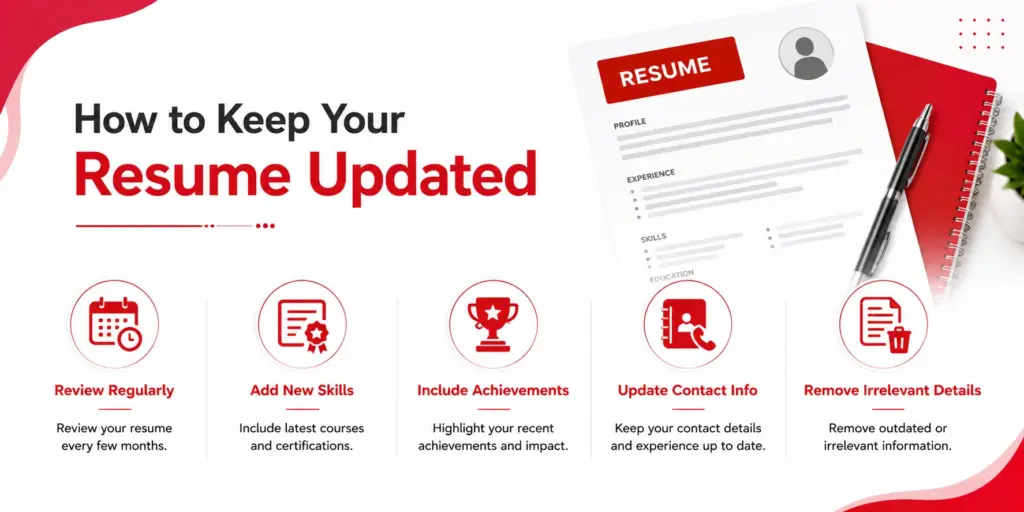
- Review It Quarterly: Every three months, set aside dedicated time to assess and evaluate your resume thoroughly. During this period, make any necessary changes or updates to ensure it reflects very well your current skills and experiences, with a presentation that makes it a good fit for the types of jobs you're pursuing.
- Add New Skills: You must list the latest or new courses you've taken to enhance your skills and expertise in a particular department. Adding these courses or certifications to your resume will show your dedication towards upskilling and upgrading to match the rapidly changing corporate culture.
- Include Recent Achievements: Enlist all your achievements in the current company or workplace to show your potential to the employer. This will tell your employer how important and beneficial you are to the company. It can increase your chances of getting your dream job.
- Update Contact Information: All the information in the resume must be right and appropriate. That's why it is very important to update the changes in the information on your contact details, work experience, and phone number, so that the employer can easily contact you.
- Shorten Irrelevant Details: Periodically evaluate your resume to eliminate any experiences that are old-fashioned or not relevant to the current narrative of your career. A resume that is lean and firm holds the eyes of the reader better. It keeps a hiring manager from getting confused with the unnecessary information and maintains the forward momentum necessary for favorable hiring decisions
Common Resume Mistakes to Avoid in 2026
Even the most qualified candidates can undermine their job prospects by making mistakes on their resumes. These errors can lead to missed opportunities and give potential employers the wrong impression. Below are some common pitfalls to avoid when crafting your resume:
Using a Generic Resume for All Applications
One-size-fits-all resumes are a thing of the past. Recruiters can easily spot when a resume has been mass-distributed without tailoring it to the specific job.
- Why it’s a mistake: Each job has unique requirements, and a generic resume may fail to highlight the skills and experiences most relevant to the role.
- How to avoid it: Customize your resume for every application by aligning your skills, experiences, and achievements with the job description.
Overloading It with Information
A resume is not your autobiography. Including every detail about your education, work history, and achievements can overwhelm the reader.
- Why it’s a mistake: Too much information can make your resume difficult to read, causing recruiters to miss the key points.
- How to avoid it: Focus on relevant experiences and achievements. Keep your resume concise, preferably one page for early-career professionals and two pages for more experienced candidates.
Ignoring Formatting and Presentation
Your resume’s appearance is just as important as its content. Poor formatting can make even the best qualifications look unprofessional.
- Why it’s a mistake: A cluttered layout, inconsistent fonts, or a lack of white space can discourage hiring managers from reading your resume.
- How to avoid it: Use a clean, professional format with clear headings, bullet points, and consistent font styles. Ensure ample white space to enhance readability.
Not Proofreading
Spelling mistakes, grammatical errors, and typos are among the quickest ways to disqualify yourself from consideration.
- Why it’s a mistake: Errors signal carelessness and a lack of attention to detail, qualities no employer wants in an employee.
- How to avoid it: Proofread your resume thoroughly. Use tools like Grammarly and ask a trusted friend or mentor to review it for you.
Your career, our expertise - talk to a counsellor
How to Make an ATS-Friendly Resume in 2026
Understanding the psychology of recruiters can help you craft a resume that captures their attention immediately. Recruiters often scan resumes with specific goals in mind, such as identifying candidates who match job requirements, showcase confidence, and demonstrate professionalism. A winning resume is designed to resonate with the recruiter by:
- Highlighting relevant skills and achievements upfront.
- Using action verbs and quantified results to communicate value.
- Maintaining clean, easy-to-read formatting to ensure information is accessible at a glance.
By aligning your resume with what recruiters are subconsciously searching for, you increase the chances of making a lasting impression.
What Recruiters Look For in the First 6 Seconds of Reviewing Your Resume
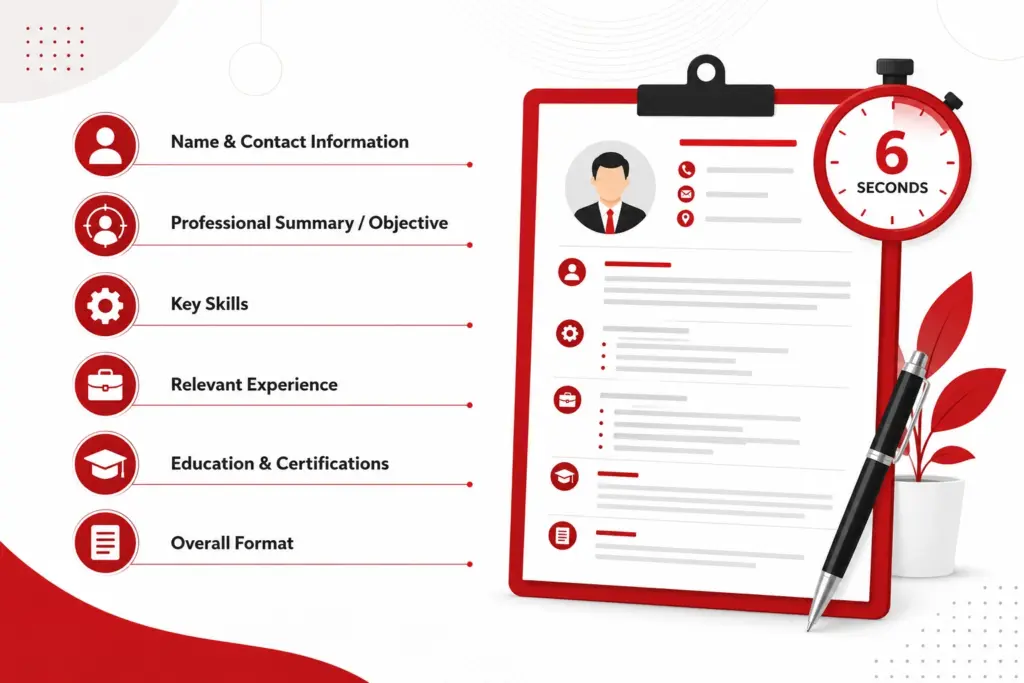
You will be surprised to know that the recruiters take a look in just 6 seconds. Based on their one look, they decide whether to call you for an interview or not. This is why it becomes crucial for you to carefully design your resume and mention each and every detail related to you. In these 6 seconds, the recruiter go through the following details in the resume:
- Your Name and Contact Information: It is mentioned on the top of the document, which grabs instant attention. You must be careful of the fonts and the spelling in your name, as it is your first impression.
- A Professional Summary or Objective: The next point is your professional journey, which is short and includes information like how you started, your qualifications and your career goals. You must be careful of the grammar, and this summary must be short and concise.
- Key Skills: This is one of the essential parts of your resume where you list all your skills and expertise within your job descriptions. You can make practical use of your skills to create an impact.
- Relevant Experience: Another thing that recruiters focus on in your resume is your prior working experience. These working experiences show your potential and your working ability. Here, you can also mention all your professional achievements.
- Education and Certifications: If you are a fresher, you must focus on your education and certifications, as it will tell the employer whether you have the knowledge and skills for the related job or not. That’s why you must take care of this part of your resume.
- Overall Format: The format of the resume must be clean, clear, and professional. Avoid grammatical and spelling mistakes. Also, do not overwrite and avoid including false information.
A resume designed to prioritize these elements will ensure it passes the initial test and gets a recruiter’s attention for a closer review.
Your career, our expertise - talk to a counsellor
How to Make Your Achievements Shine: Turning Tasks into Impactful Results
A resume isn’t just a list of tasks; it’s a showcase of your impact. To make your achievements shine:
- Quantify Your Successes: It is essential to show some numbers or percentages, as this can have a good impact on the recruiters. Using tangible achievements, like increased sales by 30% or 20% cost-cutting, can be good examples. This will present practical examples of how you can work and derive attractive results for the growth and development of the organization.
- Use Action-Oriented Language: Simple language does not have a strong effect. Using bullet points to highlight and using strong verb can catch the recruiter's focus. Start bullet points with strong verbs like "Spearheaded," "Optimized," "Achieved," or "Designed." This can be a good description of yours and make a good impression.
- Focus on Relevant Achievements: It is important to tell and underline all our achievements that take the company towards growth and development. These achievements can be very helpful as it will show how much potential you carry and how you can give justice to the offered job position.
- Context Matters: It is essential to carefully brief your strengths and skills. Also, you can mention all the weaknesses that you have overcome and learn better. This context is very important as it will tell the employer how gracefully you can handle the challenges and how you can manage your work with those challenges.
- Highlight Leadership and Initiative: If you’ve led a team or handled a project as a leader. You must enlist them in your resume. It will show your managerial and leadership skills and make your resume look stronger.
Conclusion
A great resume is much more than just a simple document—it serves as a vital bridge to your professional aspirations and future opportunities. It is essential to dedicate the necessary time and effort to craft a resume that not only tells your unique story but also effectively showcases your skills and experiences in a way that aligns perfectly with your dream job. Remember, your resume isn’t solely about where you’ve been in your career; it also functions as a powerful tool to demonstrate where you’re headed in the future.
What’s your next career move? Are you looking to advance in your current field or perhaps pivot to a new industry altogether? Start building the impressive resume that will help you get there! If you are ready to kick-start your career, this blog can be very useful for you to prepare a perfect resume. Building new skills and earning recognized certifications is one of the most reliable ways to strengthen your resume over time. Explore trusted online learning platforms to find programs that align with your career goals and what employers are actively looking for in your field.
If you are looking to strengthen your resume with industry-relevant skills and recognized certifications, exploring trusted platforms like Collegesathi can help you discover programs aligned with your career goals and current market demand.
Frequently Asked Questions
Your professional summary should briefly outline the major career accomplishments you have had, the skills you possess, and the goals you have set for yourself. Pay attention to the fact that you are a strong candidate for the job position you are applying for. In short, it is a summary of your professional journey and goals in four to five sentences.
One to two pages is the ideal length for a resume. If you are early in your career, your resume should only be one page. However, if you have a substantial amount of achievements, two pages would suffice as long as the information on the resume is relevant.
No, apologies, but that is not the case. Focus on the positions that are most relevant to the job you’d like to apply for. Consider including achievements that prove your capability for the position and add value to the skills that will be needed for the position.
Certainly, but a professional template should be clean and simple. Use a template that is straightforward and easy to read for a change. It should respect the appropriate and accepted norms of the field without using too many graphics or odd layouts.
It is recommended that you update your resume at least four times a year or after significantly essential achievements have been reached, certifications gained, or changes to roles. Keeping it current means you’re ready for opportunities whenever they arise.
Address gaps in your employment history with reason and avoidance of negativity. For instance, if you were involved in freelance projects, or volunteer activity, or involved in self-development, it can be mentioned. You can elaborate more on the somewhat detailed cover letter if necessary.



Popular PG Programs
Trending UG Programs
Doctorate Programs
Executive Programs
Trending Online Universities
In Demand MBA Specializations
In Demand MCA Specializations
CollegeSathi aims to provide unbiased and precise information to aspirants, along with comparative guidance on universities and their programs. The content on the CollegeSathi website, including text, graphics, images, blogs, videos, and university logos, is meant for informational purposes only and should not be considered a substitute for official information provided by academic partners. While we make every effort to keep the information accurate and up to date, CollegeSathi does not guarantee the completeness or reliability of the content and is not responsible for any errors, omissions, or losses resulting from its use.
© CollegeSathi 2026. All Rights Reserved.